Introduction
Recession discussions often dominate economic headlines. However, determining whether a downturn is imminent requires examining multiple indicators rather than relying on isolated data points.
Here are five key signals economists monitor.
- GDP Growth
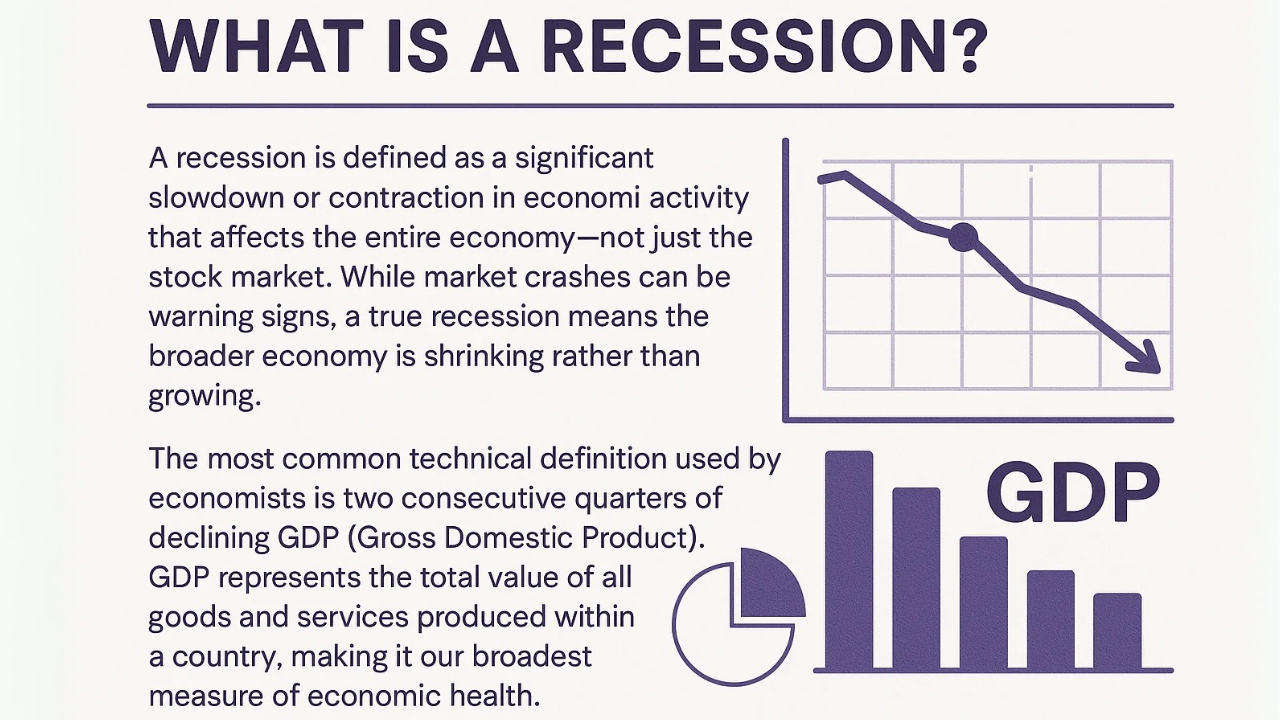
Gross Domestic Product measures overall economic output.
Two consecutive quarters of negative GDP growth are often associated with recession, though broader indicators are also considered.
- Unemployment Trends
Rising unemployment can signal economic contraction.
Key aspects to monitor:
- Job creation numbers
- Labor force participation
- Layoff announcements
A sudden increase in job losses may indicate slowing business activity.
- Consumer Spending
Consumer spending accounts for a large portion of U.S. economic activity.
Declining retail sales or reduced discretionary spending can reflect reduced consumer confidence.
- Yield Curve Inversion
When short-term interest rates exceed long-term rates, it creates a yield curve inversion — historically associated with future recessions.
However, timing between inversion and recession can vary.
- Business Investment
Businesses often reduce expansion plans when uncertainty rises.
Declining capital expenditures may signal cautious corporate outlooks.
Final Thoughts
Predicting recessions is complex. Rather than focusing on headlines, monitoring multiple economic indicators provides a more balanced understanding of economic direction.