Introduction
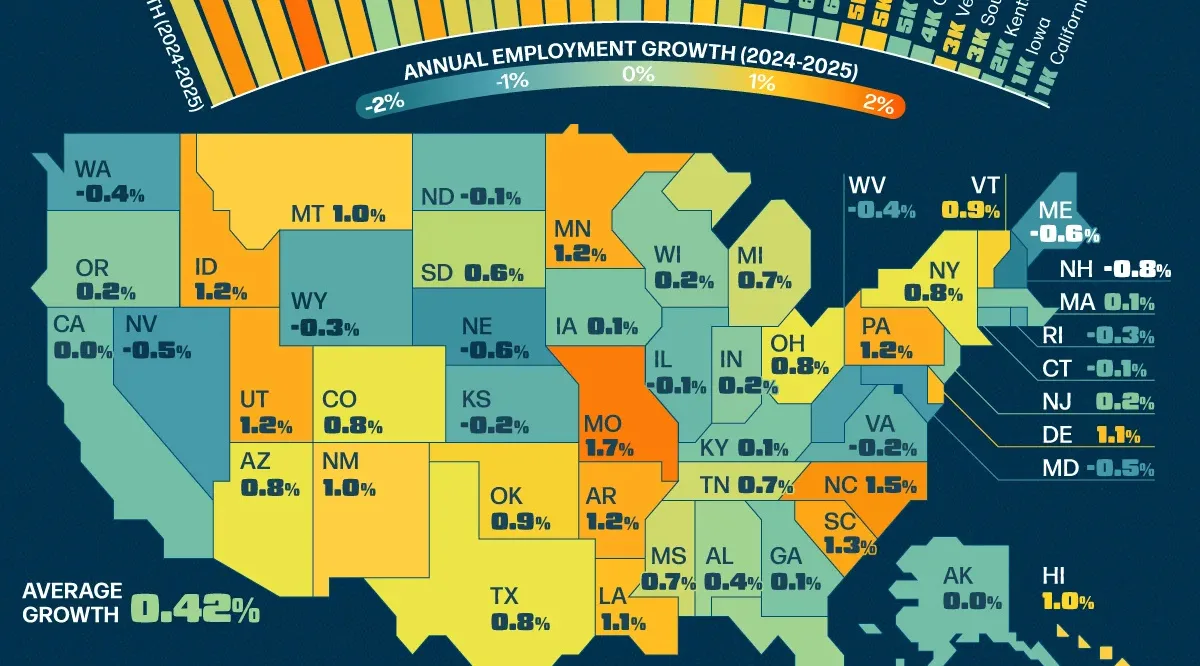
Job growth remains one of the strongest indicators of economic momentum. While national employment figures provide a broad overview, job expansion often varies significantly by state.
In 2026, certain regions are outperforming others due to industry concentration, migration trends, and business investment patterns.
What Drives State-Level Job Growth?
Several factors influence job growth at the state level:
- Population increases
- Business-friendly policies
- Industry diversification
- Infrastructure development
- Education and workforce training programs
States with strong labor pipelines often attract corporate expansion.
High-Growth Industries Fueling Expansion
States experiencing faster job growth often benefit from:
Technology and AI Development
Regions investing in innovation hubs continue to attract startups and tech expansions.
Healthcare and Senior Services
An aging population drives demand for healthcare professionals nationwide.
Energy and Infrastructure
Both traditional energy and renewable projects contribute to regional hiring surges.
Advanced Manufacturing
Automation and domestic production incentives have revitalized certain manufacturing hubs.
Migration and Remote Work Effects
Remote work flexibility has shifted employment patterns:
- Workers relocating to lower-cost states
- Employers hiring across state lines
- Growth in suburban and secondary cities
This redistribution has created new job clusters outside traditional metropolitan areas.
Challenges in Slower-Growth States
States experiencing slower growth often face:
- Population decline
- Industry dependence on a single sector
- Limited infrastructure investment
However, economic cycles can shift regional performance over time.
Final Thoughts
Job growth trends vary significantly across the country. Monitoring state-level employment data can help workers and businesses identify emerging opportunities and make informed relocation or expansion decisions.