Introduction
Tax season often raises one key question: “When will I receive my refund?”
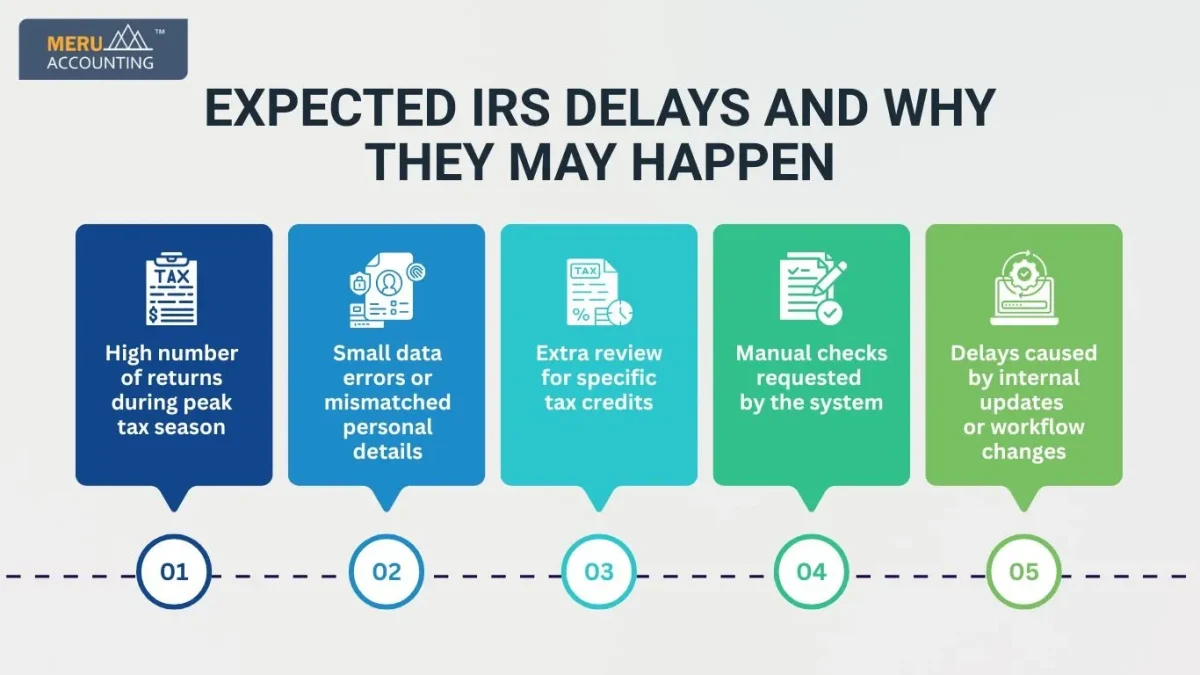
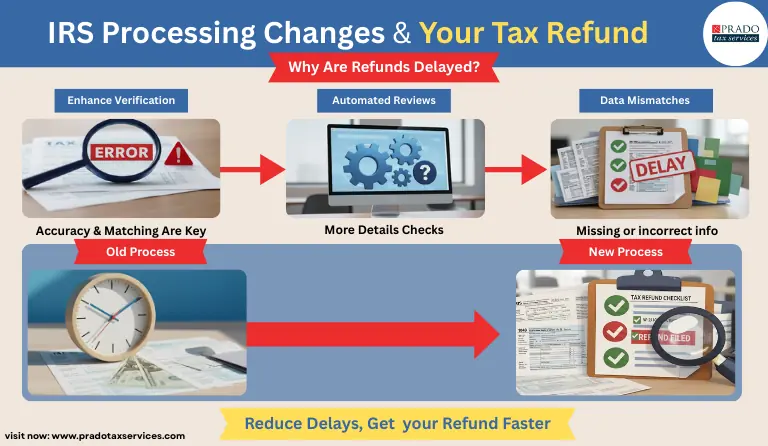
While many refunds are processed quickly, delays can occur for several reasons.
Common Causes of Refund Delays
Refund delays may result from:
- Incomplete or incorrect information
- Identity verification reviews
- Errors in reported income
- Paper filings instead of electronic submission
Electronic filing generally speeds up processing.
Processing Time Expectations
Typical timelines:
- E-file with direct deposit: fastest
- Paper filing: longer processing time
- Amended returns: additional review required
Backlogs may vary year to year.
Identity Protection Measures
To prevent fraud, the IRS may:
- Flag suspicious returns
- Require identity confirmation
- Delay refunds until verification is complete
Security measures protect taxpayers but may extend processing times.
How to Track Your Refund
Taxpayers can:
- Use the official “Where’s My Refund?” tool
- Check filing status
- Confirm bank information accuracy
Regular monitoring helps reduce uncertainty.
How to Avoid Delays
Best practices include:
- Filing electronically
- Double-checking Social Security numbers
- Reviewing income statements
- Keeping documentation organized
Accuracy remains the most important factor.
Final Thoughts
While refund delays can be frustrating, understanding common causes and following best practices can help taxpayers navigate the process more smoothly.